Most razors are designed by people who think about blades. Henson came at it like aerospace engineers who think in microns and thermal expansion. That different starting point explains why the Henson razor feels unlike the usual safety razors on the market and why many shavers who had resigned themselves to irritation and ingrowns suddenly find they can shave daily without drama. This is an attempt to unpack the why behind that experience, where the Henson shines, and where a traditionalist might still prefer a different tool.
The aerospace roots and the tolerance story
Henson Shaving grew out of a Canadian aerospace machine shop. That origin matters because aerospace tolerances are not marketing fluff, they are necessity. When a company is used to machining satellite parts, a flatness deviation of a few microns is the kind of thing they actually measure and reject. Apply that mindset to a safety razor and you get a head that clamps a double edge razor blade in a sandwich of perfectly flat planes, where the blade edge is supported along more of its length than is typical.
Most safety razors bend the blade into an arc. The arc provides stiffness, but it also introduces small variances in how much of the blade edge is truly supported and how consistent the blade exposure is along the edge. The Henson head uses a very shallow bend and unusually close clamping right up to the edge. The aim is to prevent blade chatter, which is the tiny vibration you sometimes hear and feel as the edge flickers across stubble. Chatter makes an edge feel harsher than it is. The first time I used a Henson, the silence of the stroke stood out. No rasping, just the whisper of lather moving.
If you have thick, wiry growth, chatter can be the difference between a glassy pass and a face that looks like it lost a fight with a cat. When a manufacturer says blade exposure tolerance is kept within a few microns, it sounds like brochure language until you shave with two razors back to back and realize one lets you dial in a shallow angle and go on autopilot while the other requires constant micro-adjustment.
How the geometry changes the shave
Put a Henson head side by side with a familiar classic like the Merkur 34C and you will notice a few things. The cap and baseplate on the Henson form a very defined shaving plane and a guard that wants to sit flat on the skin. The sweet spot for the angle is narrower than on some razors, but it is easy to find. Rest the head so both the top cap and guard touch your skin, then lower the handle by a few degrees until you feel cutting. Keep that plane and the razor will do predictable work.
Blade exposure and gap determine aggressiveness, yet they do not tell the whole story. Because the Henson clamps close to the edge, the effective feel on the face is milder than the numbers might suggest. That mildness can be deceptive. On coarse beards, the Henson still clears growth at a surprisingly high rate because the edge is so stable. With the standard Henson mild model, I can do two careful passes and a few pickups and get to a presentation-grade result. On days with three days of growth, the medium version shortens the job. The aggressive version exists but is much rarer in the wild, and most users never need it.
If you are coming from a single blade razor that likes a steeper angle or a straight razor that rides the spine with an open blade, expect a small learning curve. The Henson rewards a light touch and a consistent, shallow angle. The moment you start forcing pressure, performance drops, irritation rises, and you will think it is not for you. Back off, let the head ride the plane it wants, and suddenly you get that clean swath with minimal feedback.
Daily driver or special occasions tool?
A good question to ask of any razor is where it sits in your rotation. The Henson fits naturally as a daily driver for people who want efficiency without post-shave recovery time. If you shave Monday through Friday before work and cannot afford a red neck or a sting during the morning meeting, this is the kind of instrument that gives reliable results with fewer variables.
Wet shavers who enjoy the ritual might prefer a straight razor session on weekends, or a Shavette for the rush of precision and risk. I still love a well-honed straight for the meditative pace and the crisp sound when a properly stropped edge slices through lather. But when I have 8 minutes and a call in 20, I reach for the Henson. A top-tier safety razor brush, quality shaving soap, and a blade you know well complete the kit. The Henson does not demand an elaborate routine, though it rewards good prep like any razor. If you want to pair it with a familiar benchmark, consider the Merkur 34C as your reference point. The 34C is a stalwart: smooth, forgiving, middle-of-the-road exposure. The Henson, by contrast, feels more locked-in on angle and more efficient per pass given similar mildness.
Blade choice and what matters more than you think
Double edge razor blades vary in sharpness, coating, and smoothness. The Henson’s clamping reduces edge chatter, which makes even average blades feel better. That means you can explore blades without as much punishment. Still, blade choice changes the character of the shave.
On my face, a sharp yet coated blade like a Nacet, Gillette Platinum, or BIC Chrome Platinum runs beautifully for three to five shaves. Feather blades, which are unashamedly keen, can feel surgical in the Henson medium, excellent for dense growth but easy to overdo if your technique is heavy-handed. If you usually prefer milder blades with a Merkur 34C or a vintage Gillette Tech, you may find you can step up in sharpness in a Henson and still get comfort.
Availability matters too. If you are in the U.S., sampling is easy. If you are buying through Henson Shaving Canada or a local retailer, check stock and price, then buy blades in sleeves once you identify favorites. You do not need boutique blades. A carton of 100 double edge razor blades can be had for a modest cost, and in a Henson, many of those budget blades perform above their pay grade.
Technique: what the razor wants from you
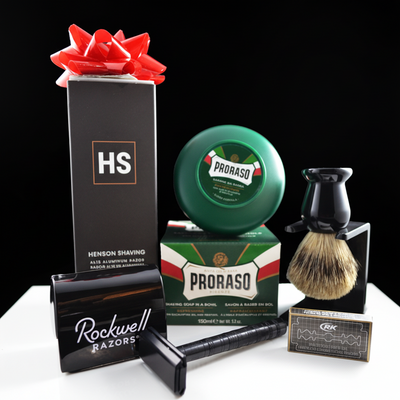
Rushing invites mistakes. Even with a forgiving head like this, preparation and cadence count. Hydrate the hair, lift it with a good washing of the face, and build a lather that suits your water hardness and skin. A shaving brush is not a museum piece, it is a functional tool that lifts and aligns stubble. You do not need a rare badger knot, a solid synthetic brush will generate slick, dense lather with less product. Shaving soap that favors glide over cushion tends to pair better with the Henson’s firm clamping. If the lather is too puffy and dry, the razor can skip rather than slide.
Keep pressure feather-light. Let the weight of the handle do most of the work. On a two-pass shave, go with the grain first, across or slightly against if your growth pattern allows, then pick up stragglers under the jaw and around the Adam’s apple. The Henson’s head is slim enough to work under the nostrils without acrobatics. If you are mapping your face for the first time, move a fingertip over freshly rinsed skin between passes to find remaining rough patches and adjust your stroke direction shallowly into the grain rather than directly against it.
Comparing Henson to other single blade options
Many people discover Henson after a frustrating run with cartridges or a disposable razor. Cartridges promise closeness through stacking, yet more blades often means more passes over skin, more opportunity to harvest moisture and wreck your barrier. A single blade razor reduces that contact. Within the single blade world, you have three big branches: safety razors with protective guards, Shavette razors that hold half a double edge blade in an open handle, and the classic straight razor.
Shavettes are honest, unforgiving trainers. They reward perfect angle control and punish sloppy prep. A straight razor, when honed and stropped well, is smoother than many expect because the edge bevel geometry creates a wide, keen cutting surface that can slide through growth with less resistance. Both demand time, space, and a calm hand.
Henson sits at the other end of the spectrum. It aims to give you much of that single-edge cleanliness in a guard-protected format that removes variables. If you want the romance of a leather strop and the smell of camellia oil, the Henson will not scratch that itch. If you want to get a near-straight result before your espresso cools, it will.
Handle, balance, and materials
The standard Henson comes in aluminum with a hard anodized finish, and there are titanium versions for those who prefer more heft. Aluminum keeps the head nimble and the overall feel light, which encourages the right technique. A heavy handle can tempt you to push. In the Henson, lightness is a feature. The balance sits closer to the head, where control matters most. That helps when you are contouring the jawline or working around the chin. The machining on the handle offers grip without cheese-grater aggressiveness. Even with slick lather or a steamy bathroom, the knurling holds.
Durability is about coating and thread longevity. Anodized aluminum stands up to years of use, provided you rinse thoroughly and avoid harsh chemicals. Cross-threading kills razors faster than wear. Start the screw gently, let the threads catch, and you will never have an issue. If you want something that will still be shaving your grandkids, titanium will certainly outlast you, but aluminum already exceeds the lifespan of casual ownership.
The economics and the hidden savings
A pack of double edge blades might cost the same as a single cartridge. Forty dollars buys enough blades to last many months. Even with a premium blade rotation, you are looking at cents per shave rather than dollars. The razor itself is the major upfront expense. Consider the amortized cost: over two or three years of daily shaving, the per-shave cost drops to levels that make cartridge subscriptions look like luxury consumables.
Less tangible, but just as real, is the reduction in post-shave products. If you are not nursing razor burn and ingrowns, you can streamline your aftercare. A mild, alcohol-free splash or a simple balm with niacinamide and glycerin will do. Keep alum as a spot treatment, not a ritual. When a razor and a blade work well together, the best aftershave is cold water and a towel.
Edge cases, problem areas, and when it is not ideal
No razor fits every face. The Henson’s narrow angle tolerance that gives consistency can feel constraining for veterans who like to tilt and play the angle for maximum efficiency. If you are used to a vintage adjustable that lets you ride the cap on flat areas and the guard on tricky spots, the Henson asks you to stay disciplined. Some people with extremely dense, curly hair and a tendency to ingrown hairs may still find that their skin prefers a single pass daily rather than chasing absolute smoothness. The Henson helps by cutting cleanly at skin level with less blade flex, but technique and restraint matter more than the brand name.
Another edge case is very long growth, say a beard of a week or more. The Henson medium can munch through it, but a pre-pass with clippers or a guard-comb trimmer saves time and reduces the chance of clogging. This is true for most safety razors. If you like flipping between styles, keeping stubble for several days then shaving clean, you will get better results by respecting that first bulk reduction.
A word about travel, maintenance, and daily habits
Traveling with a safety razor in carry-on runs into security rules about loose razor blades. Many airports confiscate DE blades. If you travel frequently and refuse to check luggage, consider mailing a small tuck of blades ahead, buying locally, or using a cartridge temporarily. The Henson head unscrews quickly for cleaning, and its open channels rinse out easily with hot water. Once a week, I drop the head in a bowl of warm water with a drop of dish soap, brush it lightly with a soft toothbrush, rinse, and towel dry. No need to overthink it. Do not store a wet blade against the head for weeks on end, and you avoid tea stains and crusts of dried lather.
Pairing the Henson with the rest of your kit
A razor is only as good as the lather it rides. If your hard water kills suds, lean toward soaps with chelators or creams that produce glide even in mineral-rich water. Something like a tallow-base with added glycerin or a vegan base with slickness additives will let the edge run without skipping. Build lather on your face with a synthetic shaving brush to lift hair and hydrate the base of the stubble. If you prefer bowl lathering, go for it, then paint on and add water in small amounts until the sheen appears. A too-dry lather makes any razor feel harsher. Aim for yogurt, not meringue.
After the shave, rinse with cool water, pat dry, and, if your skin runs sensitive, use a simple balm. If you enjoy scent, layer it separately rather than relying on your shaving soap to carry the day. Keep things uncomplicated. The Henson’s appeal https://elliottapfd607.lucialpiazzale.com/safety-razor-blades-for-coarse-beards-top-picks-and-techniques is how little drama it brings. Let the rest of the routine match that ethos.
Safety razors, cigars, and a quick detour on accessories
Every now and then I get asked about crossover gear from other hobbies. Someone who collects cigar accessories often appreciates tactile tools with precision. A fine cigar cutter and a well-machined razor scratch similar itches. The Henson’s clean lines and tight tolerances will feel familiar if you like things that click and close with authority. But do not conflate visual polish with function. Some shiny Razors are shelf queens. The Henson is designed to work, not to pose.
If you enjoy curating your bathroom shelf, fair enough. Pair the Henson with a stand that does not trap water under the head, and avoid leaving wet lather on the anodized finish for long periods. That is it. No special oils or polishes required.
The Merkur 34C as a yardstick
I mentioned the Merkur earlier because it is the baseline many wet shavers know. The 34C is the Honda Civic of safety razors: simple, predictable, easy to recommend. It bends the blade more, and the cap-guard geometry allows a slightly wider range of angles. If you grew up on the Merkur, your muscle memory might prefer a steeper angle. The Henson’s flatter angle and firmer clamping create a different feel, less audible feedback, and fewer surprises when you get to tricky terrain like the lower neck.
With the 34C I would occasionally get a hint of tug on the first pass if I had skipped a day. The Henson medium with a sharp blade glides right through that same growth. If someone is struggling with neck irritation using the Merkur, I suggest trying the Henson mild first, pairing it with a smoother blade, and evaluating after a week of daily shaves. That is enough time for a fair assessment, once your skin stops reacting to change.
Environmental footprint and the quiet virtue of simplicity
Safety razors predate the single-use mindset. A year’s worth of double edge razor blades fits in a palm-sized box and recycles as scrap steel if you collect the spent blades in a tin. There is no plastic cartridge head, no proprietary docking system, just steel and a handle that lasts. The Henson fits that tradition while updating the tolerances. If you care about waste and prefer durable goods to consumables, this approach has an elegant economy.
A short, practical comparison list
- If you want a safety razor that feels locked-in on angle with minimal blade chatter, the Henson stands out. If you prefer to vary angle widely and enjoy audible feedback, a Merkur 34C or a vintage Gillette might suit you better. For dense, wiry growth, pair the Henson medium with a sharper blade and slicker lather. For daily shaving on sensitive skin, start with the Henson mild and a smooth, coated blade. If you crave ritual and open steel, keep a straight razor or Shavette for weekend indulgence and use the Henson on weekdays.
Buying notes and availability
Henson sells directly, and there are authorized retailers that stock models in different finishes. If you are shopping from Canada, look for Henson Shaving Canada stock to reduce shipping times and avoid customs surprises. Many shops offer sampler packs of double edge razor blades, which is the best way to start. I recommend trying three to five blade brands over a month rather than burning through a dozen at once. Take notes, however brief. Sharpness, smoothness, and longevity are personal. In my log, certain blades that underwhelmed in one razor came alive in the Henson because of the clamp and angle.
Expect the aluminum version to be the most cost-effective and fully capable. Titanium feels luxurious, and if you like a little more momentum in the stroke without extra pressure, it has merit. But the shave quality comes from geometry more than metallurgy.
Why Henson converts skeptics
Plenty of people try a safety razor, feel drag, nick themselves, and retreat to an edge razor with cartridges. They assume the problem was the single blade razor, not the execution. Henson lowers the barrier because it controls variables the user used to manage manually. It is not magic. It is just a head that presents a sharp edge at a consistent angle, keeps it from vibrating, and gives you an easy way to maintain contact with the skin without digging in. That is enough to change outcomes for a lot of faces.
If you already love safety razors and keep a rotation of heads and handles, the Henson might feel like an exercise in restraint. It does one thing in a very specific way. If you are looking for a daily tool that disappears in the hand and leaves nothing behind but smooth skin, that specificity is the point.
Final thoughts for a better first week
The first week with any new razor sets the tone. Do not chase baby-smooth on day one. Let your skin and muscle memory adjust. Keep blades fresh, lather wet, and pressure absent. Map your growth and accept that your neck is a different country than your cheeks. Give the Henson the right angle and it will give you consistency, which is the one thing most shavers lack. Once you can reproduce a comfortable two-pass shave every morning, you have leverage: you can choose to refine, to experiment with blades, or to leave well enough alone.
If your bathroom drawer holds a graveyard of cartridges and a few half-used disposables, a well-made safety razor is a way out. The Henson just makes that exit ramp smoother.